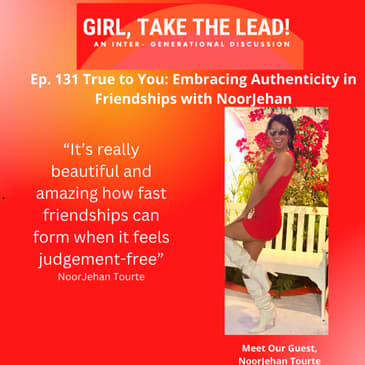
NoorJehan Tourte, Millennial, joins Yo to talk about friendship, love, and values.
About NoorJehan:
After unexpectedly making it to the semi-finals of the 2022 Sports Illustrated Swim Search Competition, she has made it her mission to get women excited about the prospect of falling on their faces, over and over, if it means they are making their one life on this earth count. She believed that becoming a Sports Illustrated model would represent the culmination of a lifetime spent searching for her true identity, but the experience helped her realize that her childhood dream was not only to be a cover model, but also a role model, one who empowers ladies to show the world every side, from every angle, unapologetically. Amidst the multitude of societal pressures put on women to conform, she wants to reassure her fellow females that living the life you painstakingly cultivated for yourself is worth even the worst of days, the worst of moments. Because wouldn’t you rather stumble living life, than squander it standing still?
Here are 3 takeaways from today’s episode:
1. Values play a role in friendships and perhaps the most
important are authenticity and having a “judgement-free” zone.
2. Broken trust is perhaps the key reason friendships end.
3. The emotion of empathy may be a lot easier to say than to really practice..
Mentioned in the Episode:
Ep. 112, Eww: Failure Resume
Ep. 114, Ego Check: Unpacking Authentic Confidence in
Leadership with Christie Garcia.
Ep. 115, Part 1 – Inside Out: Unveiling the Layers of Internal Family System with Uri Talmor
Priya Parker’s book: The Art of Gathering
“Why Friendships End and How to Cope”
More About NoorJehan:
NoorJehan is currently a Group Senior Vice President Brand Strategist at healthcare advertising agency AREA 23. Prior to working in advertising, she was a U.S. Brand Marketer at Pfizer and a healthcare consultant at PwC. She holds an MBA from Columbia University and an MPH from UCLA. She has a passion for storytelling that is universal, and believes this can be done if we all lead with empathy.
Check out: www.fgpbar.com. This is the plant-based protein bar NoorJehan and her husband just launched together!
And look for her skincare line, Ashiana Skincare, coming soon!
How to reach NoorJehan:
Social:
@noorjehantourte
@fgpbar
@ashianaskincare
How to reach Yo Canny:
Our website:
You can send a message or voicemail there. We’d love to hear from you!
email: yo@yocanny.com (Yo)
FB group: Girl, Take the Lead
https://www.facebook.com/groups/272025931481748/?ref=share
IG:
yocanny (Yo)
LinkedIn: https://www.linkedin.com/in/yocanny/
00:00:06
Welcome Nora Jihan to Girl Take the Lead.
00:00:10
We are so excited to have this topic.
00:00:12
Oh my God, it's going to be such a good episode.
00:00:15
So thanks for being here. So excited, yes.
00:00:19
And I'm excited for the topic. Thank you for having me.
00:00:22
Absolutely. And maybe we'll start if you
00:00:25
would just introduce yourself to the listener so they know a
00:00:27
little bit about your background.
00:00:29
Yeah, of course. So my name is Nurja Huntort, and
00:00:34
I am here talking to Yolanda because I embarked on an
00:00:38
interesting journey in 2021. I decided to try out for the
00:00:44
Sports Illustrated swim search competition at the age of about,
00:00:49
you know, well let's see, I just turned 39, so I was 37 and I
00:00:54
tried out on a win. I made it all the way to semi
00:00:57
finals. It was an amazing experience.
00:01:00
I actually ended up making some of my best friends through the
00:01:03
entire competition and search process and it got me reflecting
00:01:09
on my journey. I I'm actually an executive at a
00:01:11
healthcare advertising agency, so I worked in advertising and
00:01:15
marketing my entire life and that kind of then leading into
00:01:20
the Sports Illustrated swim search competition.
00:01:22
I think I came out of that just more in love with the notion of
00:01:26
storytelling and then connecting with women and empowering women.
00:01:30
So I've just been trying to do that as much as I can and that's
00:01:33
why I'm here talking to you. Great.
00:01:35
And I am just so thrilled that you have taken that energy and
00:01:42
now are helping like you thought you were going to be a cover
00:01:46
model and now you're a role model.
00:01:49
So this is just wonderful. So think it's just terrific how
00:01:53
you pivot on. I just did an episode about a
00:01:58
failure resume, right. And and I had so much fun
00:02:02
writing it because anytime we have some kind of change or
00:02:08
disappointment, something else opens up.
00:02:11
Yeah. And it sounds like your life
00:02:14
just just really opened up. I I think so.
00:02:18
And I I think you and I had talked about that and we
00:02:20
connected on you know, you talked about this notion of
00:02:22
failure resumes. And I remember in because
00:02:26
listen, I made it to semi finals and then I tried out again and I
00:02:30
did not advance any further that next time I tried out, but I
00:02:34
intend to submit again. And I remember in my second
00:02:38
submission video I had said I just want to get women excited
00:02:42
about the idea of falling on their faces over and over again.
00:02:46
You know, because I had, I had when I was filming that second
00:02:50
submission video, I had actually taken a really nasty fall during
00:02:54
my own birthday party. This was exactly a year ago and
00:02:58
it was awful. Like I was supposed to shoot the
00:03:01
mission video and be in a bathing suit and be confident
00:03:04
and my leg was completely, completely bruised up like from
00:03:09
like hip to knee and I just rolled with it.
00:03:13
Of course I was in pain. I was upset.
00:03:15
I I my ego was bruised and along with my leg.
00:03:19
But that became the shtick for my submission video.
00:03:22
Like, yeah, I just get excited about falling because if you're
00:03:25
not stumbling, you're not living life.
00:03:27
And I feel like that's what you talked about, that failure
00:03:29
resume. So if you can't pivot from
00:03:33
things that didn't work out or losing a competition, then what
00:03:38
was the point of it? Right.
00:03:41
Well, I guess so many times we don't risk because we're afraid
00:03:48
we're in that fear. So if we embrace that, no matter
00:03:54
what will happen, there will be some learning that comes as a
00:03:58
result of that. That's like, I think gives us
00:04:03
more confidence and more courage to step into it again or to do
00:04:08
something that maybe is uncomfortable in some regard.
00:04:13
Yeah. And.
00:04:14
It gives you gives you like giving yourself permission that
00:04:20
you know. Other people might be wondering
00:04:23
why are you doing this or why take that risk.
00:04:26
But if you know that things could not turn out the way you
00:04:32
want them to, if you know that you're going to stumble, I think
00:04:36
it gives you permission to then enjoy what you don't know what
00:04:41
the unexpected as part of that decision is.
00:04:45
Yeah. Because I think that there's
00:04:47
research that says we are more frightened about the future and
00:04:53
the unknown then we are about things that maybe have that are
00:05:01
in the present or that, you know, that we're willing to live
00:05:04
with rather than take the risk into something unknown.
00:05:10
And I think if you've done this a few times in your life where
00:05:13
you have stepped into the unknown and gone, OK, it's not
00:05:18
going exactly to plan, but we make it work, yeah.
00:05:24
Yeah, absolutely. And you tell me a story about
00:05:27
your wedding even you know. When you hear stories that other
00:05:31
people are telling you and you go, Oh, well, that that won't
00:05:34
ever happen to me or that's not going to be my situation, like
00:05:38
you almost get as much information.
00:05:41
So you can prepare for something like, all right.
00:05:44
If the more people you talk to and the people that have done it
00:05:47
before you and they say, well, you know plan for this or this
00:05:50
could happen. So be prepared.
00:05:52
And I thought I had done all of that and I think the the
00:05:57
variables that you can't control for our other people.
00:06:01
So I just went into the whole wedding planning and wedding
00:06:05
process, just assuming that all of my friendships are going to
00:06:11
be just as they've always been for all of these years that we
00:06:15
have been friends. And also because I had been
00:06:18
attending those friends weddings and, you know, I just assumed
00:06:23
that those friendships weren't available.
00:06:27
So when people were telling me, you know, things can go wrong or
00:06:30
things like things can be unexpected, I just didn't expect
00:06:33
it to be the friendship component.
00:06:35
And I think that's what you and I were talking about, where I
00:06:38
went into it and like, I'm thinking, OK, like you know,
00:06:41
guess they're going to show up or something will go wrong.
00:06:44
Someone will lose like a ring or something.
00:06:47
But what I wasn't prepared for was emotions and behaviors from
00:06:54
friends that I've known for years.
00:06:56
And I just I since I was not prepared for, I actually did not
00:07:00
have a good coping mechanism in the moment.
00:07:03
And it's something that I had to continue reflecting on, you
00:07:06
know, well past the wedding. Yeah, well, I think they say
00:07:12
that male friendships are activity based and female
00:07:19
friendships are emotional based. So, and I was thinking this
00:07:26
morning before as I, you know, thinking about our episode and
00:07:32
my own wedding and where my, I think I held a resentment for
00:07:38
many, many years And I realized this morning what was probably
00:07:44
going on for this friend. She was going to be my maid of
00:07:48
honor and she wanted to not do the job The night before she
00:07:53
told me I I don't want to do it. Wow, you didn't tell me this.
00:08:00
Yeah. And I she ended up doing it.
00:08:05
No. But I had a resentment about
00:08:08
that for a long, long time. But I realized this morning, as
00:08:13
I was reflecting on it, is that she felt very, very
00:08:17
uncomfortable. Like she wasn't good enough, you
00:08:22
know? Like she felt insecure, like
00:08:25
maybe the imposter syndrome was really getting her right.
00:08:28
And and in the moment I think I was so self-centered.
00:08:34
Like I'm the bride, right? It's supposed to be my day.
00:08:38
Hello. And you know, today I can look
00:08:43
at it differently and go have compassion for her and
00:08:47
understand it because I didn't understand it then.
00:08:51
Yeah. Was it kind of like that for you
00:08:54
or? I'm listening to you.
00:08:56
And I was like, Oh my gosh, you wanted to such a better human.
00:09:01
Being. I think it I did a lot of
00:09:07
reflecting on why, you know, people behaved the way they
00:09:15
behaved. And even when I got the answers,
00:09:19
whether it was directly from them or, you know, coming to the
00:09:23
conclusion from my own reflection of understanding the
00:09:26
position they were in, I don't. I still don't think.
00:09:32
And I think I'm only a couple years removed from the whole
00:09:38
experience. So I hope I get to the place of
00:09:43
letting it go or you know, understanding it and accepting
00:09:49
it. But I'd also like to normalize
00:09:57
the feeling that sometimes if you feel like you've done the
00:10:04
self reflection, and if you feel like you know where you were at
00:10:08
fault or where you could have done better and you still come
00:10:12
to the conclusion that that particular friendship or or
00:10:17
person's behavior just wasn't warranted, I think it's OK to be
00:10:25
heard, absolutely. Yeah, and and you know, keep in
00:10:30
mind, my wedding was 32 years ago so far.
00:10:36
I'm sure you'll get there a lot faster than I did, but it can
00:10:40
take time, so there you go. And and even if it takes time,
00:10:47
and maybe that's a question I have for you, it changes the
00:10:50
friendship. Oh yeah, And there was another
00:10:55
thing that happened where the friendship died.
00:11:01
You know, I think maybe what we can talk a little bit too is
00:11:04
about what are the values I think we put into friendship,
00:11:12
Because in my case, one of them was support and loyalty and
00:11:19
trust. Yeah.
00:11:22
And she, this woman broke trust with me in a big way.
00:11:27
There's certain values that we hold, you know, just in our
00:11:34
friendships that you can't, you know, like the line gets drawn.
00:11:39
Like, yeah, you know, that's not OK.
00:11:42
Yeah. And when that when that value is
00:11:48
broken, I think that's what's really hard to come back from
00:11:52
and and that that's what I'm learning, right?
00:11:55
Like that that unexpected situation where you feel like
00:11:59
you've been friends with someone for years and you think you know
00:12:04
them and you do. But there is change in
00:12:06
everyone's life. And so if a change in their life
00:12:10
or your life has put pressure on a value that defines the
00:12:16
friendship, it does change the friendship.
00:12:21
And you know, and I think for for me something I take pride in
00:12:28
is if you're in my circle and you're close to me, I it's a
00:12:33
judgement free zone. I will not judge you.
00:12:36
I don't. I don't think that my friends
00:12:39
and I share the exact same you know, views.
00:12:42
We don't have the same upbringing.
00:12:44
We don't have the same like work style or the same views on
00:12:49
relationships. But all of that means that if I
00:12:52
love you and you're part of my circle, I'm not judging you.
00:12:57
And if what I what I learned, what felt like the betrayal for
00:13:03
me was that I was being judged. And I think that is where that
00:13:09
feeling of just betrayal of like wait like I've never judged you,
00:13:14
but I'm feeling and I'm learning that you're judging me and
00:13:19
that's tough to come back from because I think what I
00:13:23
experienced more than anything wasn't a meanness.
00:13:28
I didn't feel angry and it's not even resentment.
00:13:32
What I feel more than anything is uncomfortable and insecure
00:13:38
around those people now. And that's why I think it's OK
00:13:44
to just have to sunset a friendship or, you know, remove
00:13:50
yourself from it or move on from it.
00:13:53
Not out of anger, not out of resentment, but because I found
00:13:57
I was like, I'm not actually comfortable anymore.
00:13:59
I'm not. It's not that I'm.
00:14:00
It's not that I'm not. It's not just that I'm not
00:14:03
enjoying myself. I'm actually not comfortable
00:14:05
around this person or these people because anything out of
00:14:10
my mouth, anything I am wearing, anything I say, are they judging
00:14:15
me for it? Are they, you know, drawing
00:14:17
conclusions in their heads and then going to go talk about it
00:14:20
and and it's like man, I don't want to deal with that at this
00:14:22
age, so. Where, you know, we talked a
00:14:27
little bit about empathy when we were kind of planning this
00:14:32
episode. So where does empathy fit into
00:14:37
this, you think? The right answer is to say yes,
00:14:40
we have to be empathetic towards what people are going through in
00:14:44
their lives. And I think where empathy fits
00:14:49
in. Again, this might not be the
00:14:52
right perfect thing to say, but I think where I'm at is where
00:15:00
was the empathy shown to me? And I'm like, and it's so hard
00:15:05
to be empathetic when you don't feel like you've been given the
00:15:09
empathy and and and I don't think that that's a difficult
00:15:14
admission to make because my view on empathy is that it's
00:15:19
such a beautiful and easy thing to say to people, Let's all be
00:15:25
empathetic. But if you really break it down,
00:15:29
it's one of the hardest things to actually practice.
00:15:33
We're literally telling people walk a day in someone else's
00:15:37
shoes, I will never live your life.
00:15:40
You will never live mine. Every day, every thought, every
00:15:43
emotion is so nuanced. And that's what makes us
00:15:46
individual. So when we say that to one
00:15:48
another, we say that in the media and say that, like, be
00:15:51
empathetic, be empathetic. I think it's very easy for
00:15:55
people to be sympathetic, but I think it is challenging for us
00:15:59
as humans to be empathetic. And where that fits in for me in
00:16:04
this story is I shouldn't be surprised that I wasn't being
00:16:09
shown empathy because it is a hard construct, but it does hurt
00:16:15
when you're not giving it. Yeah, I think with some of our
00:16:22
friends, there's just this natural kind of way of being
00:16:27
together that you. I've noticed that with my
00:16:31
friends now. One of them, they say that we
00:16:35
make our best friend when we're 21 years old.
00:16:37
I don't know if that's true or not, but this particular best
00:16:41
friend, I did meet her when I was about 21 and we were in
00:16:45
college together. And we're still very, very
00:16:49
close. And we're we're sisters.
00:16:52
I I think empathy is so in the heart and so deep that it's
00:17:04
almost hard to put it into words.
00:17:06
The way that you can love and support and feel for somebody
00:17:14
and want the best for them in their life and those kinds of
00:17:21
friends, they're hard to find, right?
00:17:27
I mean, at my age, there's been so many people.
00:17:30
I was reflecting on this. We found a couple articles and
00:17:34
I'll put them in the show notes for our listeners in case they
00:17:37
want to look a little bit more into this.
00:17:39
But why we lose friends or why we stop being friends with
00:17:44
someone? I think it's because it takes
00:17:47
work. Yeah.
00:17:50
You know you you want. It's not just about having a
00:17:56
good time. It's this is who I am.
00:17:59
It's sharing who you are with somebody.
00:18:04
And when you do that, you know it's back and forth.
00:18:08
They share with you what's going on for them and you share with
00:18:11
you them what's going on for you.
00:18:13
And there's this flow with each other that, you know, makes it,
00:18:22
I think challenging, like you're saying, to have that empathy for
00:18:25
somebody you know doesn't just happen.
00:18:30
I think you're right that the more information that you're
00:18:33
exchanging and sharing with one another them, like I always say
00:18:38
that a good vehicle for empathy is storytelling.
00:18:42
And if we're not taking the time to tell one another the stories
00:18:46
of our lives, past, present and future, then how are we able to
00:18:53
elicit empathy from one another? So in a friendship, I agree with
00:18:56
what you're saying, that it is, you know, exchanging
00:19:01
information. And as you said that, I was
00:19:03
thinking about how I remember, you know, a particular
00:19:08
friendship where I was so taken back that that that person was
00:19:12
opening up about things to someone they had just met
00:19:16
through me, but they had never told me those things.
00:19:20
And so and that's and more power to everyone who you feel
00:19:25
comfortable with is who you're going to talk to.
00:19:27
And that's the beautiful part about, that's the basis of
00:19:30
friendships. And the other thing that I have
00:19:32
learned to accept as I'm getting older and and friendships are
00:19:36
aging and you're meeting new people, is that you will not
00:19:41
always be everyone's cup of tea and someone that you were
00:19:46
friends with in your 20s or your 30s.
00:19:49
If their lives have changed, if yours, if your careers have
00:19:53
changed, your family dynamics or family, you know life has
00:19:57
changed. You might not be their cup of
00:20:00
tea anymore in your 40s. And we can spend all that time
00:20:03
beating ourselves up or trying to be the friend that they need
00:20:07
or that you know that they want you to be.
00:20:12
But I think it's OK. Like you said, there's a lot of
00:20:17
unexpected and unknowns and risks to take in life, and one
00:20:20
of those risks might be like letting go of a friendship.
00:20:25
It feels risky to do, but I think it's OK to take that risk
00:20:30
and give yourself. I have to give myself that
00:20:33
permission to do that because you will constantly be trying to
00:20:41
be someone for someone else versus just being yourself and
00:20:45
attracting those friendships. Yeah, well, I can definitely see
00:20:51
in the past where I have wanted so desperately for this person
00:20:58
in my life to kind of validate who I was so I would feel better
00:21:05
about myself and this person. Never reciprocated like, oh, I I
00:21:13
mean, I I would do anything for them.
00:21:16
It was like, I remember that. It's just like this
00:21:21
unreciprocated vulnerability, you know, that, you know, I'm
00:21:26
just trying so hard to be their friend and and now I can look
00:21:32
back and laugh and go, Oh my God, Yolanda, it was about you.
00:21:36
It was totally not about them, you know.
00:21:38
I mean, it was me seeking something from them that, you
00:21:43
know, anyway that they couldn't. They had no interest in in doing
00:21:49
so. That's fine, you know, move on.
00:21:53
Yeah. And and I think I look back to
00:21:56
at my naivete that again, because I think the thing that I
00:22:01
pride myself in is if I'm your friend, I'm not judging you.
00:22:07
And my naivete was that if I'm opening up and expressing
00:22:13
myself, the UPS and the downs, especially the downs that these
00:22:17
people that I'm opening up to are not judging me for it.
00:22:22
And I think that's when, like that reality kind of hit when I
00:22:26
found out that they were. And it took some, you know,
00:22:33
processing. And I couldn't understand why I
00:22:36
was so taken aback by it. But I think it was because when
00:22:39
the roles were reversed and they were at those lows, I didn't
00:22:43
feel like I was ever judging them for it.
00:22:46
And it took me a while to get to the point of realizing that.
00:22:50
And I think was actually, I was listening to an episode on your
00:22:53
podcast where you know about it was a woman who coaches about
00:22:59
the ego, that you only tend to gossip or talk poorly about
00:23:04
someone if you're trying to elevate yourself or if you're
00:23:07
feeling insecure. It took me a while to get there.
00:23:10
And then I took a lot of pride in that.
00:23:12
I said, yeah, heck yeah, I didn't.
00:23:14
Didn't judge you for that, 'cause I don't, I don't feel.
00:23:17
I don't feel the need to. So when I realized that maybe
00:23:22
people were judging me for things, it wasn't about me, it
00:23:26
was about them. It was almost easier to move on
00:23:30
from that friendship. Yeah, but I like what you're
00:23:32
saying about normalizing some of the emotions that happened for
00:23:36
us in those times, like anger, you know, until we get to that
00:23:42
point where we can really grieve and say, oh, it's OK like you
00:23:48
said, I'm not the cup of tea for everybody.
00:23:50
Not everybody's going to want to be my friend, you know?
00:23:54
And the ego takes a hit. Like, OK, but I think one of the
00:24:05
things too, that struck me with what you were just saying about
00:24:08
being judged. I learned this from one of our
00:24:13
guests who's a psychotherapist and said he said that when
00:24:19
somebody is judging, they're trying to control.
00:24:26
Isn't that terrific to to hear? I mean, because it totally is
00:24:32
that other person trying to control who we are and make us a
00:24:41
certain way. I just anyway, I share that with
00:24:47
you because that really changed my view on people who are very
00:24:51
judgmental. I I love that too, because I
00:24:54
think that, and especially if you are a person or a young
00:25:00
woman that is ambitious and driven and not afraid of, you
00:25:09
know, continuing to better yourself or recreate yourself
00:25:12
for all of those things, you're going to be met with a lot of
00:25:15
judgement. And you quickly realize that
00:25:21
there are people that are going to stand by you when you're
00:25:24
continuing to succeed. Or there's less people that will
00:25:28
continue to stand by you when you're continuing to succeed.
00:25:31
And the people that were there for you every time you failed,
00:25:36
when you start succeeding, a lot of them drop off.
00:25:43
And I think that is similar to the notion that you're just
00:25:47
talking about that judging is a way to control because it's a
00:25:50
lot easier to to root for someone when they're down than
00:25:54
it is to root for them when they're up.
00:25:56
And you've just got to find the people that will root for you
00:25:59
when you're up. And and I mean that's I think I
00:26:03
know we started this talking about that Sports Illustrated
00:26:05
film search competition. But I think that as an in my
00:26:09
adult female life, I went into that competition wanting to win
00:26:13
it for reasons entirely outside of female friendships.
00:26:18
But I came out of it with these really authentic and fast
00:26:22
friendships that were made with women, adult women, I think we
00:26:27
all were and had no business judging each other.
00:26:31
We're all there trying to win a, you know, a swimsuit
00:26:35
competition, right? There's no there's you know, and
00:26:38
and fine, the rest of the world, whatever it might be.
00:26:42
Our corporate world, our mom world, our, you know, immigrant
00:26:46
family worlds. Like those could all be judging
00:26:48
us, but we're not judging each other.
00:26:50
It's really beautiful and it's a kind of amazing how fast a
00:26:54
friendship can form when it feels so judgement free.
00:26:59
That's so great to hear. I feel that most of my my
00:27:02
friends happened because we were kind of suffering the same way
00:27:09
we we were both got in the boat together, you know, and we are,
00:27:14
I think. Do you think that's different?
00:27:17
What's your viewpoint on that? You know, as you're saying that
00:27:20
I'm thinking of my relationship with my parents and whether the
00:27:24
construct of them being baby boomers or also being immigrants
00:27:30
to this country, right. My brother and I were first
00:27:33
generation, were born and raised in Southern California to Indian
00:27:38
parents. And I I don't always think
00:27:44
growing up that their parenting style was like radical
00:27:49
transparency or some would call that inauthentic, you know, and
00:27:55
in maybe trying to keep the Disneyland facade over things
00:28:00
while they themselves were figuring out this cultural
00:28:04
melting pot that they had now become part of and were expected
00:28:07
to raise children in and somehow preserve their culture from
00:28:11
their home country. So when I meet some of my
00:28:16
friends and their parents and I see the difference in their
00:28:20
communication styles, I think that had that has a lot to do
00:28:24
with why I value the authenticity.
00:28:27
And again I'm not suggesting that my parents were inauthentic
00:28:30
in. But you know even now it's I
00:28:33
always tease them like if I ask them a question, especially when
00:28:36
it comes to their health, then it's always a roundabout answer.
00:28:41
You know like Oh yeah. So maybe that is generational
00:28:47
And then I'll I'll also do it the cultural differences and I I
00:28:56
do think there's and it maybe this is also The New Yorker.
00:29:00
I mean there's an efficiency to having authentic relationships
00:29:05
like the time we take. I mean, we know this thing in
00:29:09
the in the corporate business world and I mean client service,
00:29:12
like the time we take to decode what our clients are really
00:29:15
asking of us because they might not be radically transparent
00:29:20
with us is time lost. And I think I love these
00:29:25
friendships where there's so much authenticity, because then
00:29:30
that's allowing for more time to get to know one another and to
00:29:35
enjoy all that comes with getting to know one another.
00:29:39
Yeah, yeah. You know, it's interesting too.
00:29:45
Like how things can circle back. Like this podcast for example,
00:29:53
has allowed me to circle back with some work friends who knew
00:30:00
me in my career at different points and are now like my big
00:30:05
supporters. Like, you know, we're we've
00:30:09
rekindled. So what I love about friendship
00:30:12
is that it doesn't have to be staccato, you know, You like
00:30:16
maybe it goes away for a little bit and then it comes back.
00:30:19
You have more things in common. Maybe you have, you know it's
00:30:22
like more like a loop rather than a straight line.
00:30:27
You know of what happens with friendships, I think.
00:30:31
I love that because that does make as I hear that it makes me
00:30:34
feel better about all the things I was talking about earlier.
00:30:38
Right? Where maybe it makes it makes me
00:30:42
feel better, right about those decisions where you say it's OK
00:30:46
if you have to walk away or it's OK if you have to accept that
00:30:48
this is not what it used to be or it's over 4 now.
00:30:54
Right. Because it might loop back and
00:30:56
be a different type of relationship.
00:30:59
But that's nice because that's really hopeful and it's it's
00:31:01
funny you say that I am I I I hosted a birthday brunch last
00:31:09
Sunday and oh, it's always fun. New York at this time of year is
00:31:13
just amazing. But I wanted to do something
00:31:16
different and I had just read, I just finished reading Priya
00:31:19
Parker's book The Art of Gathering and and she talks
00:31:22
about it in personal and professional settings.
00:31:24
I mean every time you gather with people it's just an
00:31:26
opportunity for human connection.
00:31:29
And she suggested this activity called 15 Toasts and you pick a
00:31:33
theme for the event and everyone shares a story on theme, keeps
00:31:39
it under 3 minutes and then leads the group in a toast to
00:31:44
that thing. So I use my birthday as an
00:31:46
excuse and I did. I I got together a group of
00:31:49
people was 15 of us and it was new friends, old friends, people
00:31:55
who might just really like admire.
00:31:58
And a lot of them did not know one another.
00:32:00
But they've all been from different parts of my life.
00:32:02
Work school. Just New York friends.
00:32:06
My husband's friends and you know, I kind of blackmailed
00:32:10
everyone a little bit, I said. This is what I want as my
00:32:12
birthday gift from all of you and Yolanda.
00:32:15
It was really amazing. Because.
00:32:18
Everyone. Everyone was game.
00:32:21
Everyone did it. Everyone shared these stories
00:32:25
and it was exactly I think, what you know, Priya Parker said in
00:32:28
her book. Where it's just somebody.
00:32:30
These people are strangers and you might feel more comfortable
00:32:32
sometimes opening up to strangers because they don't
00:32:34
have any context of your life. And, you know, some stories were
00:32:38
heartwarming, others were keeping us laughing, others were
00:32:42
tearjerkers. So I was just watching all of
00:32:44
these people that I really care about and I'm seeing all of them
00:32:47
sharing laughs and tears and toasts together.
00:32:50
And then numbers were being exchanged and people felt really
00:32:53
connected. And it was just, it was really
00:32:55
beautiful. It was probably one of my
00:32:57
favorite, you know, birthdays. And I think it goes back to like
00:33:02
what I loved, like the efficiency of like being
00:33:04
authentic and how quickly then you can make great connections
00:33:08
and, you know, new friendships because of it.
00:33:11
I think the the keyword that you brought up, that I think is an
00:33:17
element of friendship is that connectedness which makes it
00:33:24
different than just an acquaintance.
00:33:27
Oh yeah. Right.
00:33:28
So we go from someone we know move into really being connected
00:33:37
with that person. Sometimes it's based on your
00:33:40
history, sometimes it's based on what you're currently going
00:33:43
through at work and you need help with.
00:33:46
But you know, it just seems like however that connectedness
00:33:52
happens, that's what pulls us together in friendship.
00:33:57
Absolutely. And we always joke about, you
00:34:00
know, it's like the New York Minute.
00:34:02
I have friends and I've known for years in New York, and I see
00:34:05
them every weekend. But it's always catching up on.
00:34:09
How's work? How's life?
00:34:11
How's instead of hearing the stories that I heard last
00:34:14
Sunday, Yeah. Oh wow.
00:34:17
That's the moment that changed your life when you got the job
00:34:20
offer in New York or that's the moment that changed your life
00:34:23
when you, you know, lost that, you know, boxing match.
00:34:26
Like it's it's. And I remember a friend talking
00:34:29
about how he lost a boxing match.
00:34:30
I was at that boxing match. But for him to have like said
00:34:34
that moment, you know change that the theme of our brunch was
00:34:38
a moment in your life that has changed your life.
00:34:40
That's what I just decided to move the theme to see And it's
00:34:46
funny because I remember attending that, but to hear him
00:34:49
say how much that impacted his life that that's the
00:34:53
connectedness that you kind of not that we take it for granted,
00:34:58
but we don't just stop and talk to each other on that on that
00:35:04
level at all. Times and that share that
00:35:07
vulnerability that we were talking about before which is
00:35:10
super present. So oh that sounds great.
00:35:14
This might be a good good point to end I could I could keep
00:35:17
talking to you for days. So same.
00:35:20
As I'm standing really still because I don't want audio to
00:35:24
garble. But I think it's just been so
00:35:27
lovely. Is there anything else that we
00:35:30
didn't cover that you'd like to tell our listeners about?
00:35:34
I think, I think we covered it all.
00:35:37
I feel you know what I love and I appreciate from you is kind of
00:35:41
we started with sometimes friendships end or why they end.
00:35:44
But there's this like hopeful notion to it whether that one,
00:35:49
you know finds a way to renew or you find new friendships and and
00:35:54
letting go of things make space for other cool things whether
00:35:57
it's friendships or pursuits. And we talked about taking risks
00:36:01
and the only other thing I mean like I'm talking to you now.
00:36:05
I'm only doing this because I'm just putting myself out there
00:36:08
and taking a risk to to to connect with more women and
00:36:13
share stories like this. And and then I got into you
00:36:16
know, I decided to start a plant based protein bar company with
00:36:19
my husband and a skin care line. I think just all in the past two
00:36:23
years of just putting yourself out there.
00:36:26
So it's OK if you have to let go of other things at times because
00:36:30
you know new opportunities will open up.
00:36:32
Absolutely. And do you want to tell our
00:36:35
listeners how they can find you and learn more about your other
00:36:38
businesses and? Yeah, sure.
00:36:41
You can find me on Instagram at Noorjehan Torte N0 0RJ,
00:36:49
EHANTOURTE. It's very short, but I'm sure
00:37:00
you'll put that in your show notes.
00:37:01
I was clear that you can find our website for our plant based
00:37:05
protein bar fgpbar.com and I'll definitely send you some
00:37:11
samples. Yolanda it's a plant based
00:37:13
protein bar and yeah that's that's that's how you can find
00:37:17
me and DM me, chat with me. I love having these kind of
00:37:20
conversations and I'll totally be that person who you can
00:37:24
invent to like, I'm over this friendship.
00:37:26
Cool. It's OK.
00:37:29
That's free. And I'll also put in the book
00:37:34
Art of Gathering that sounded like great ideas in that book.
00:37:38
So I'll share that with. Our beautiful writers as well.
00:37:41
Great. Thank you so much for just being
00:37:44
this incredible light and inspiration for everyone SO.
00:37:48
Oh, you're so kind. Yolanda, thank you.
00:37:49
Thanks for this platform for inviting me.
00:37:52
And just for giving all of us a space to do this.
00:37:56
You're so wonderful. Thank you.