What if the biggest factor influencing your leadership isn't what you know—but what you don't realize is influencing you?
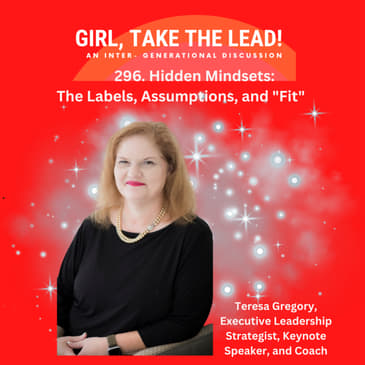
In this episode, Executive Leadership Strategist, Keynote Speaker, and Executive Coach Teresa Gregory joins us to explore what she calls our hidden mindsets—the labels, assumptions, and unconscious thinking patterns that shape how we lead, communicate, evaluate others, and even see ourselves.
Drawing on more than 20 years of leadership development experience, Teresa shares practical examples of how hidden mindsets show up in hiring decisions, performance reviews, workplace relationships, and the stories we tell ourselves about what we're capable of achieving.
In This Episode
Together, we explore why "fit" can sometimes limit innovation, how labels become self-fulfilling, and what leaders can do to recognize and shift the thinking patterns that may be influencing their decisions without them even knowing it.
Memorable Takeaways
✨ Why Teresa prefers the term hidden mindset over bias
✨ How our brains create shortcuts that influence decision-making
✨ The role assumptions play in hiring and leadership decisions
✨ Why "fit" can become a barrier to diversity, innovation, and growth
✨ How hidden mindsets show up in performance evaluations
✨ Why imposter syndrome is often a hidden mindset in disguise
✨ The difference between intention and impact
✨ How dialogue creates stronger relationships than discussion
✨ Practical ways to identify and challenge limiting beliefs
✨ Why every leader should have a mentor—and be a mentor
💡 "Not all bias is bad. The question is: Is it limiting your belief?"
💡 "Acknowledge it. Write it down. Then be deliberate about showing up differently."
💡 "I can teach the steps. I can't teach kindness."
💡 "The path may look different than your five-year plan—and that's okay."
Resources & Links for Teresa
🌐 Website:
www.squaredsuccess.com
🎁 Free Leadership Resource:
www.squaredsuccess.com/podcast
📧 Connect with Teresa:
teresa@squaredsuccess.com
📱 Social Media:
@squaredsuccess
📖 Coming Soon:
Teresa will be featured in a new compilation book releasing this fall.
What Teresa Would Tell Her 20-Something Self
Get a mentor—and be a mentor.
Find people who will challenge your thinking, expand your perspective, and help you grow. Then do the same for someone else.
Guest-Inspired Card Selection
🦋 With Brave Wings She Flies
When asked to choose a card from the Girl, Take the Lead! online store, Teresa immediately connected with the Brave Butterfly card. For her, it represents the courage to take flight, embrace new opportunities, and trust yourself as you step into what's next.
A fitting choice for someone who recently launched her own business, serves her community as an elected official, and continues to help leaders uncover what's possible when they challenge their hidden mindsets.
Stay Connected with Girl, Take the Lead!
🎙️ Podcast Website:
https://girltaketheleadpod.com
📬 Newsletter:
https://girltaketheleadpod.com/newsletter
💌 Heartfelt Cards & Gifts:
https://girltaketheleadpod.com/shop
🎧 YouTube:
https://www.youtube.com/@girltakethelead
💼 LinkedIn:
https://www.linkedin.com/in/yocanny/
📸 Instagram:
https://www.instagram.com/girltaketheleadpod
👥 Facebook Community:
https://www.facebook.com/groups/girltakethelead
Thank you for listening to Girl, Take the Lead! If you enjoyed this episode, please share it with a friend, leave a review, and subscribe so you never miss a conversation designed to help you lead with greater awareness, confidence, and intention.
[00:00:08] Welcome back to Girl, Take the Lead, the podcast where we challenge the status quo, share meaningful conversations, and explore what it really means to find our voice and lead with intention. And I'm your host, Yolanda Canny. Have you ever made an assumption about someone before they even spoke or found yourself holding back because of a label you carried about yourself?
[00:00:36] Maybe you've wondered whether you were the right fit for a role, team, or even a new chapter in life. My guest today believes these experiences are connected by something she calls our hidden mindsets. The assumptions, labels, and beliefs operating beneath the surface that quietly influence our decisions, relationships, and leadership.
[00:01:02] Joining us is Teresa Gregory, Executive Leadership Strategist, Keynote Speaker, and Executive Coach. With more than 20 years of experience helping leaders improve decision-making, strengthen team performance, and drive business results, Teresa has become known for helping people uncover the thinking patterns they don't always realize are shaping their actions.
[00:01:27] In our conversation, we explore everything from hiring performance reviews, which I personally hate, to imposter syndrome, intention versus impact, and why the labels we accept about ourselves can sometimes become the very things that hold us back.
[00:01:48] Most importantly, Teresa shares practical ways to recognize these hidden mindsets and choose a different path forward. It's a thoughtful conversation about self-awareness, leadership, and the courage to question the stories we've come to believe. Let's jump in. Here you go. Teresa, welcome to Girl, Take the Lead!. We are going to have such a good conversation about this.
[00:02:17] I am super excited to be here. Thanks. Can you start by introducing yourself to our audience, please? So my name is Teresa Gregory, and I recently started my own company, went out on my own, and hung my own shingle for leadership strategy and development. And I still do training and development. I still build training programs as well, but I focus more on the coaching side of it for leaders and executives and business owners.
[00:02:43] Yeah. So you have a particular lane you like to talk about. You don't call it bias, right? You call it. Why don't you talk a little bit about that? I call it your hidden mindset. I don't call it bias because bias is a biological process and your body does it naturally. So it's a fight or flight response. That's where bias comes from. But what I find is when you call it bias, people shut down. They think, oh, I don't have a bias.
[00:03:13] That's not me. I'm not judgmental. They it comes with this kind of baggage. I like to say with the word bias. So I look at the hidden mindset things that you're operating on and don't know about. Right. It's kind of what driving you or decisions you make. And you're not even realizing that you're relying on something that might be outdated. Yeah. Is it different for men and women? It is different for men and women. Absolutely.
[00:03:43] There is a difference between men and women. A lot of it is from how they were raised. So women tend to be in the workplace very subservient. They will be very quiet. They will take submissive roles if they were raised that way. Men, on the other hand, will be bulls in the China shop and they'll continue to do that. And most often men, that behavior will be condoned. So they think it's OK and they'll continue to do it.
[00:04:11] Uh huh. And we're kind of unaware of these. I want to go to bias, but you can call it by it's OK to call it bias. It's all right. We're unaware that this is underneath the way that we're behaving and being in the moment. It is. And what happens is I'll give you a perfect example. I went to Starbucks this morning, so I was in line for Starbucks.
[00:04:39] I walked in. Normally I go through the drive through, but today I walked in. I use my personal cup and the woman in front of me is standing there perfectly quaffed. She looks amazing, right? She's got her hair all in place. And then she gets and I'm thinking, God, she looks amazing and she's having a fabulous day. This is my I just biased myself, right? I made this judgment about this person based on how they're what she hasn't said anything.
[00:05:05] The moment she opened her mouth, I realized she's never ordered coffee in her life and we're going to be here 35 minutes. My viewpoint just changed because I thought, oh, she's perfectly quaffed and put together and she's going to order a coffee and it's going to be amazing experience. And she couldn't even know what the sizes were. We're like, lady, you're in Seattle. You should know. So what just happened? I had an impression. That's my first bias. Do you see that is a bias?
[00:05:34] I'm assuming she's having a great day and she looks amazing. Yeah. And the second part of that is she couldn't order coffee correctly. So now what do I think? I would never want to talk to her. She's never going to get anything done. So that's where these come from. And they're so subtle that you don't even know that you're doing it, but you but you do do it in seven seconds. You make an impression about somebody. It takes six months for you to overcome that impression.
[00:06:00] Do you think there's a difference between judgment? Like you said, you know, you made a judgment. Is that different? You think than having that bias mindset? I, I think judgment goes hand in hand with bias because that initial reaction that you have to someone will sit with you. So I'll give another example. I was interviewing.
[00:06:26] I was in the middle of an interview with a gentleman and I thought he looked great and amazing and his hands were dirty. Like they were clean, but they were like he had dirt. Right. And I thought to myself, why is his hands dirty? It just as a, just as a kind of side piece. It didn't matter to me. The person I was interviewing with said, oh, were you working in the yard before now? And he goes, oh yeah, I went into construction.
[00:06:56] I I'm doing construction as a side business that biased her. Does that, that not having clean nails was a bias for her. And then she couldn't let it go. She had to ask about it. Um, and he did get hired by the way. He's an amazing. It didn't affect his, his ability to get the job, but that is something subtly that she carries with her.
[00:07:24] If your hands are not clean, that is her personal thing that kind of her judgment or bias that she carries with her. She has since gotten over that. But at the time it really came out to play that we did. She didn't know she was having this. And we had a conversation probably an hour after this gentleman left after the interview, we had an hour conversation about why she shouldn't do that. Yeah. Interesting.
[00:07:48] But it almost was a saving grace for this guy that you did bring it up that they, that she did bring it up and that she was able to, um, kind of reframe her bias on that. Yes. You said some great articles to me, um, which I'll have in the show notes for others, but yeah.
[00:08:09] Um, you, one of them talked about how we use these unconsciously that, that there's, you mentioned that, you know, there's like a neuroscience to this, that we really can't avoid making, um, perceptions and judgments. It's part of survival for us. Right. Absolutely.
[00:08:34] So what happens is when you get exposed to something, so I'm going to, I'm going to use exposure. If you go outside and the wind hits you, the exposure, your brain goes, Oh, I need to grab a coat, right? You've learned from when you were a kid that when it's windy, you know, you're going to get cold and therefore you need a coat. So the, it, it is a biological response to stimulus. I always tell people it's a stimulus that will happen to you.
[00:09:04] And then what happens is you go, Oh, I need a coat. So you, you got a stimulus and you're, and now you have a solution. When you are meeting new people for the first time and someone, you know, I'm a redhead. People think, Oh, they're loud and bullish and everything. And they're going to love me. Right. Cause I'm a redhead and every redhead they've known is always this fun outgoing person. Right. But the one person who had a bad experience with a redhead is going to treat me differently.
[00:09:32] And I've had that experience where someone's like, Oh, the, my friend in high school was loud and obnoxious. And I just couldn't tolerate that. Right. So they're biased against me. And I haven't said a word. I have red hair and now it's coming up. So the behavior is learned all through your life and you can change these. You can disrupt this pattern by being open to the possibilities.
[00:09:58] And that's where this by it is a biological response because it is your fight or flight response that is activated to help categorize. You were, you get so much stimulus during the day. Your brain needs short. They need that short path, right? It's that it's not a short circuit. It's just a short path. And they're trying to categorize everything for you to keep you safe. Yeah. So you say, I think part of the articles that, that came to me and that you've mentioned this
[00:10:27] to me as well, is that this plays out in our life, in our work. And we were talking earlier about the way we hire people. Absolutely. And it made such sense because I can remember being asked, is this person a fit? Yes. The word fit is always the problem for me.
[00:10:54] So I've been in HR for over 20 years and I have done recruiter training and manager training and interview training. And when I worked at Microsoft, there was this, what we called as appropriate. That's your final interviewer. So you've been there all day long. And if you've passed the test, you'll go to the as appropriate. And this is someone who's senior in the organization.
[00:11:20] And what they're looking for is, are you a good fit? I'm going to put it in quotes for everybody. Fit for the organization long-term. And that can be problematic because the problem is you may be growing in your career. You may have said something that didn't come across because you're inexperienced or you're very experienced and they are concerned because you're going to come in and take over because you have more experience than they do.
[00:11:49] So sometimes that fit, that fit question is really problematic. I think it becomes an issue. I always tell people they may not have the skills, but if they have the willingness to learn something new, that's the person I want to hire because I can teach you the steps. I can teach you the steps. I want you to follow for my company, but I can't teach you being kind to someone.
[00:12:14] I can't teach you being kind to our customers or interacting with someone or being what I call kind or open-minded. I can't teach that because that is more work for me, but I can teach you the steps. I also remember questioning, how do you get diversity in an organization? If everyone is fitting the mold. Right.
[00:12:40] And if diversity is what we need for innovation and creativity, how do you, do you just keep your organization small because people fit? It's like a maintenance mode versus a growth mode. Growth mode. Absolutely. And I found, I'll give you an example of Microsoft. True story. Microsoft Xbox taking off.
[00:13:10] They had this amazing piece and they were big, 18 to 24 year olds. They got the right fit. You know, they're targeting and everything. It wasn't until they hired a woman who was a gamer. She loved to game. She was an administrative assistant and she can't hold the controller. And they were like, oh, it doesn't matter. And she's like, it doesn't, I won't use this because the controller is too big.
[00:13:36] And so what happens is their minds were open to, oh, we need to make smaller controllers. And they did. And guess what? They took off in the women and, and Asian communities. And everybody who has smaller hands suddenly wanted to have an Xbox because the controller fit them. Yeah. That is diversity in action. That is forward thinking in action.
[00:14:00] But it takes what I call courage to really say, hey, I'm looking around the room and we're all of the same opinion. I think we need to go find somebody who doesn't have this opinion to give us what I call the other side of the argument, right? Who gives me the difference of opinion to really help me shape what I'm thinking or verify that I'm not in a biased situation where I'm like, oh, everybody agrees with me. Therefore I'm right.
[00:14:29] Versus I need someone to challenge me. And that's why I tell people, if you are finding in your own career of where you are, get a mentor. Someone who's not in your industry, someone outside your company, someone who can give you that different perspective that will tell you, hey, that doesn't work. Such good advice. The article also, another article I think brought up performance evaluation. So I have a pet peeve about performance evaluations.
[00:14:59] You too. I'm just going to use one word, bell curve. Why do we have a bell curve? How does this work? No, we're going to have performance evaluations. Everybody can get a five, but we need to have a bell curve. And therefore the people who you can only have one person have a five. Right. And you have to have mostly threes. Yeah. You're like, and then everybody's a three. And you're like, well, what is the purpose of doing this activity?
[00:15:29] Because really you gave everybody a three. It doesn't make any sense to me. Right. I 100% agree. I think performance. I think performance reviews are very subjective. Yeah. When you think from a manager perspective, when you go into a performance review, I will tell you, you are bringing a lot of bias into those conversations.
[00:15:52] And so often when I talk to managers getting ready for these things, I tell them, don't look at the last six months. You are evaluating for a year. Yeah. And as a manager, every month you should be evaluating. You should not wait until they're due. You should have been evaluating and giving feedback every single month to your employees. So they know where they stand and they know what to work on.
[00:16:20] As an employee, you should be doing that. So if you are not doing that for yourself, you are missing out because our minds are a funny thing. We're not going to remember what we did a year ago. We're not. Unless you write it down, we're not going to remember the nuance of, hey, we almost lost this deal because the client was upset. I got on the phone with them. We pulled in engineering and we problem solved the solution for them. That's not going to be in the final contract you signed.
[00:16:48] That is information that is critical because it was strategic. It was forward thinking. It was planning. But if you don't write it down, you're not going to remember it. Yeah. Well, that's good advice. I often think when it comes to these performance reviews and you're writing yourself appraisal as part of the process, I would think having these things written down would be very helpful. I try and remind my daughters of that.
[00:17:17] Make sure you write that. You don't forget to put it in there. I put in my Outlook box, I have a file called WIN. That's what it's called. W-I-N. It's all caps. I put an underscore so it appears either you can put a one in front of it appears at the top or put it at the bottom so you can see it. Every time there's a WIN email, kudos, something happens. It immediately gets copied into that folder. And that helps me remember what's going on.
[00:17:46] And then I also keep a OneNote. I keep a OneNote file of wins of this. I recap what happened in a project. And then I go back through and say, this is what we could have done better. Here's the win in this project. And here's where I'm going to improve next time. Oh, good. That's really good advice. Wish I had done that. Yeah. It took a while for me to get there, but I got there quick.
[00:18:12] Well, do you think that we've been talking about kind of a bias externally motivated, right? Right. And what is, what about the internal bias and what do you see there? I tell people, if you suffer from imposter syndrome, you have a bias. That's a bias. If you, if you wake up in the morning and you're like, I'm not, I can't do this or I can't do that.
[00:18:40] And it's something internal, it's your internal thoughts on it. That is a bias. You have been biased. And often that bias is because someone has given you a label. Someone has given you in a performance review. They have told you in feedback. You've gotten somewhere where you've gotten this. Oh, you're an excellent tools trainer. True story for me at Microsoft. I was the tools trainer. I did all the internal business applications. We had a new business application.
[00:19:10] I was going to build a class for it. Literally, I'd get phone calls across the organization. Hey, we have this new tool. I need you to come build the training course for it. Became the tools trainer. I don't want to be the tools trainer. I don't like, I mean, I'm good at it. I like it, but I don't want to be known as the tools trainer. And what was happening for me is that was my internal clock. When someone presented something else, I thought, oh, I can't do that because I'm the tools trainer.
[00:19:41] I labeled it was given to me and then I internalized it and I was only the tools trainer versus going, no, I add strategic value to this organization. And while I did the tools training, let me tell you why we're doing this. And I switched the script to say, we are providing training on this application, not for people to know how to use it. We're doing it. So we reduce the number of calls to the help desk. We are doing it to promote the ROI.
[00:20:10] We are doing it to make it faster for us to hire people. So why are you doing this task? Tie it to ROI. And that shifted where people saw me. I was no longer the tools trainer. I was the person that they could rely on to give them that story. What occurs to me is the old Starbucks story of, you know, being a, if you're a barista, are you just preparing coffees or are you doing somebody's getting somebody's day started?
[00:20:39] But it, I think what you're telling us is look at the labels that, and try and reframe that label so that it's a little bit more of one that is empowering you. Instead of limiting you. Right. It's that limiting belief that then reinforces the bias that you're carrying, right? It's that limiting belief of like, I can't do that. I'm not strong enough. I don't have enough money to do it. Whatever that looks like. I don't have enough experience. I love that one.
[00:21:09] And I'm like, you don't have to have experience at your job to be able to move ahead. You can get that experience from volunteering, from working in the community, from working at your place of worship. All of those activities build into your overall ability. And we need to leverage all of those. Don't, don't discount what you're doing at home to not play out at your workplace.
[00:21:34] So are there some strategies that you would recommend for us when we get into these, into the bias trap, or we recognize that label for ourselves? The first thing I tell everybody is acknowledge it. That's the most, that is the most difficult part of the process is to acknowledge that this is happening because often we want to believe in ourselves saying, oh, I would never do that.
[00:22:01] Or I don't have that belief, or I'm not carrying that, or I don't have that judgment. And so I always tell people first acknowledge it. That's the very first step. Acknowledge. The second one is write it down. Acknowledge it and write it down. And then you need to be deliberate in how you're going to show up differently.
[00:22:24] So when I go to a meeting, I will sit in the back of the room and I be, I'm acting small because I don't want to be called on because I don't think I'm good enough. At the next time you're going to have that meeting, sit in the front of the room. And when asked a question, prepare a question that you're going to ask. And it can be simple. It doesn't have to be this big, huge question, but you're going to be intentional. And maybe you do it over two meetings.
[00:22:52] The first meeting, I'm going to sit in the front or I'm going to sit closer to the facilitator. The second time I'm going to ask a question when that, when they, because inevitably someone goes, anything else to add? Crickets are in the room, right? Nobody's wants to say anything, or you know, that the people want to get out of the meeting. So you're like, I'm not going to say anything, but really be deliberate into changing how you're showing up in that environment.
[00:23:20] When you go to Starbucks, instead of making the judgment about someone in front of you, compliment them. You look amazing today. Your coffee was great. Thank you. You know, as you're walking out, thank you for making this. I really appreciate it. That goes a long way in making you not judge people. Right. And it also puts you in a positive light being kind that really reverberates back to you.
[00:23:49] So it's taking the label and accepting it, writing it down, but then also looking at different actions you can take to almost neutralize the label. Yeah. You want to neutralize how it affects you, how it makes you feel. So when you hear the word that, that brings up a frame and then that you act accordingly to that.
[00:24:17] So by acknowledging it and then minimizing how it affects you, you will see changes. You will see people engage with you. Um, I often tell people smile, right? Smile more. Uh, and they're like, I don't want people to talk to me. Okay. When you don't want people to talk to you, don't smile, but smile more, get more engagement with people and you'll have a different opinion about them. Yeah.
[00:24:43] Well, I definitely like even going to Trader Joe's or somewhere and people are smiling. I'm thinking, oh, they're, they're lovely people. Wouldn't you want to talk to them? You know, it's like, um, they're having a great day. I mean, it's, it's sort of like that bias comes up like people that smile. So I guess what you're saying too, is we can almost recognize bias and say, oh, that's a good one to have. It's not, not all bias is bad. Yeah. Not all bias is bad. That is very true.
[00:25:13] That is 100% true. Um, I just tell people, is it limiting? Is this bias limiting your belief? If that is the case, that's when we need to work on it. Hmm. Nicely said. Very nicely said. We've talked a lot about a lot of things. Um, is there anything else that you'd like to share with our audience?
[00:25:37] The other thing I want to help people with is what I call intention versus impact. And so often when we have these biases, what happens is we come across to someone. So my intention is to be polite and kind or be direct. And my impact to you may have been negative. And I always tell people, follow up.
[00:26:03] If you are giving feedback to someone and you can see their face crumble, because we all have that micro piece that happens in their face crumbles, follow up with them and say, my intention was this, I feel like, or I'm seeing that it impacted you this way. That was not my intention. Can we dialogue about it? And I use the word dialogue intentionally. Anytime you have a discussion, I am browbeating you into my opinion. That's what discussion means.
[00:26:33] I've had enough conversations to be like, let's have a discussion. You really want me to side with your opinion and I'm not. And that's when people get irritated with you. But if you have a dialogue, you're open to the possibility of compromise. And so I use the word dialogue intentionally in that case. Hmm. I have to think about that. That sounds really good because. Discussion is a, is a, is browbeating.
[00:27:00] So even in any relationship, whether it's our significant other or work colleague, it's just know that, I mean, that openness. Because, um, you just don't know how it's going to land on somebody. And you definitely had the intention there of having perhaps it land well, but it didn't land well. And you can turn. And it could be that you fumbled something, right.
[00:27:29] Or they misheard something. Often when you have these disconnects, it's because they misheard something. Or they thought you said yes. And you, and you're saying no, and they wanted the no. So it's, they misinterpreted what you were trying to come across because you were making it, you know, verbose. And really you just need to cut to the chase. My other thing I would tell people is create the space for the dialogue.
[00:27:57] And often we're so hurried or we're, we think, oh, it, it, it's, she's going to be fine. I can follow up with her later. Take the time and the space immediately because that goes a long way. Otherwise that person's going to carry it all day long. Yeah. And they're like, oh, I really messed up on that. And you didn't. Yeah. Wow. That's really good. I'm writing them down. Cause I want to make sure I remember that myself. Yeah.
[00:28:27] So how can our listeners follow you and take advantage of your great wisdom in this area? So on social media, I am squared success. So if you're looking at Instagram or Facebook, all of those is squared success for the audience that's listening. Um, they can go to square success.com forward slash podcast, and there, they're going to get a download and they could potentially schedule time with me if they want to have a deeper
[00:28:56] discussion and really explore this opportunity. Oh, terrific. So I asked anyone that comes on the show, all my guests, Teresa, what would you tell your 20 something self today? I would tell them two things. I would tell them two things. Number one, get a mentor and be a mentor. So find a mentor for yourself. It does not have to be in your company.
[00:29:24] It could be outside of your company and sometimes that's better. So get a mentor and more importantly, be a mentor, look around you and build each other up. And that helps you in your career. It also helps you learn and grow and develop. So that's the first thing I would tell people. The second thing I would tell my younger self is that five-year plan that you have created,
[00:29:50] you can burn it or it doesn't have to always come true. Um, and when you're working and working and working and it's not going anywhere and you're like, well, I have this five-year plan. Just know that it can happen. Things on that plan can happen in a different way. And for me personally, I've always wanted the title director. I've all in my career. I've always wanted the title director. Want to be a director. Want to be a director. I want to be director Gregory, director Gregory.
[00:30:17] And a year ago, the opportunity came where I could apply for the school board, my local school board, which I did. And I was appointed. And then I ran for public office and I was elected, which is amazing. But guess what? My title is director Gregory. So everywhere I go, they don't call me Teresa. They call me director Gregory.
[00:30:41] So be careful of what you ask for on the five-year plan, because I wanted to be a director and there you are. That happened. Congratulations, by the way, on being an elected official. I can only think how fun it is for your constituency to know you and to learn from you and all the wisdom that you bring them. It's just going to be an amazing experience for them too. Yes. It's been an amazing experience to learn.
[00:31:11] And for me, this has also helped me in my own kind of path is being open to more ideas and possibilities. So I represent a body of people in my community. I represent them and I need to represent their diverseness. And if I'm not familiar with it, I'm having a meeting with someone going, hey, can you tell me more about this? How does that work? Why is that important to you? Small businesses, why shouldn't we tax more?
[00:31:41] Why is this? How does this impact you? How does it impact the bottom line? Oh, well, I should be careful of that because you may have a great idea of how to get something done. You have the same, you have the same in gold, but how you get there can be different. And that's the beauty of diversity is like, we all want the same thing, but the path that we get there, we're all going to get there eventually. And that's okay. Cool.
[00:32:08] So last thing, did you get a chance to go to the online store and pick something there? I love the butterfly card. Okay. With brave wings, she flies. Could that be you at all? Yes. That is totally 100%. The moment I saw it, that was 100% me. It's with that bravery of taking flight. And that is what I've done in my career in the last five years. Yeah.
[00:32:38] Oh, it'll be my pleasure to send that one to you, Teresa. Thank you so much. Thank you so much for joining us and for sharing so many, I think just good strategies and actions that people can take. So appreciate that very much. Thank you so much for having me. It's been my pleasure. My sincere thanks to Teresa for sharing her wisdom and practical insights with us today.
[00:33:07] One of the ideas that stayed with me from our conversation is not all bias is bad. The real question is whether belief, assumption, or label is limiting what we see in others or what we see in ourselves. Here are three reflections to carry with you. One, the labels we accept about ourselves often become the boundaries we live within.
[00:33:35] Two, growth begins when we're willing to acknowledge the hidden mindsets influencing our decisions. And three, sometimes the smallest shift in awareness can open the door to entirely new possibilities. If you'd like to learn more about Teresa, reach out through our links in our show notes. Next on Girl Take the Lead, we'll continue this conversation with a special soundbite reflection.
[00:34:04] A soundbite is a shorter episode inspired by today's episode. We'll explore the difference between fitting in and belonging. Why innovation often begins with the person who sees things differently. And the courage it takes to stay true to yourself when you're the odd person out. I think it's a topic that resonates far beyond the workplace.
[00:34:31] As always, thank you for listening and for being part of this community. Until next time, listen inward, lead outward, and remember, sometimes the thing that makes you different may be the very thing you're here to contribute. Talk soon. Bye.