What happens when you achieve the thing you thought would make you feel successful…and it doesn’t?
Bree Katulak knows that feeling.
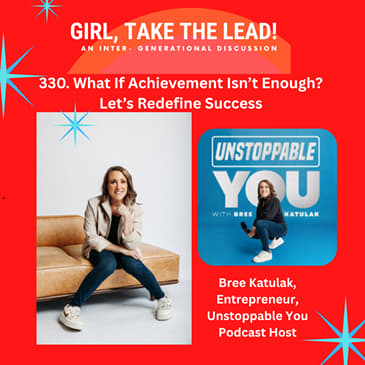
A seasoned executive, CPA, entrepreneur, and host of the Unstoppable You podcast, Bree built a career that included CFO, CEO, and President roles. When she reached the C-suite, she expected the moment to feel different — almost as if “confetti was going to fall from the sky.”
Instead, she found herself asking: Is this it?
That question began a journey of examining how she had defined success — and how much of that definition had actually been inherited from other people.
In this conversation, Bree and I explore what she calls the “invisible scorecard”: the external measures we can unconsciously use to determine whether we're succeeding — achievement, status, productivity, money, competition, and what other people think of us.
For Bree, redefining that scorecard has meant shifting:
Winning → Wholeness
Status → Self-trust
Productivity → Presence
We talk about why achievement can become connected to worthiness, the pressure to constantly be doing, and how difficult it can be to simply “be where your feet are.”
I share how, even five years into my post-corporate life, I can still catch myself hurrying as though there isn't enough time — even when I'm the one deciding how to spend it. Bree shares that presence is something she is still practicing, too.
Because redefining success isn't necessarily something we do once. It may be something we keep choosing.
In this episode, we explore:
Bree’s “invisible scorecard” and the definitions of success we inherit
Why reaching a major career milestone didn't feel the way she expected
How achievement can become tangled up with worthiness
Moving from winning to wholeness, status to self-trust, and productivity to presence
Why being busy can become part of our identity
The “masks” we wear to meet other people's expectations
How our core values can help us create a more personal definition of success
Trusting ourselves enough to choose a different path
Bree also answers my favorite question:
What would you tell your 20-something self today?
Her answer: Trust your instincts and believe in who you are.
About Bree Katulak
Bree Katulak is a seasoned executive, CPA, entrepreneur, and host of the Unstoppable You podcast. With a career spanning CFO, CEO, and President roles, Bree has led organizations through transformation, growth, and strategic change.
After years of chasing the next milestone, she began questioning what success really meant. Today, through Unstoppable Momentum and her podcast, she helps leaders and ambitious women challenge traditional definitions of success, reconnect with what matters most, and build lives and careers aligned with who they truly are.
Her message: Success isn’t about winning the game everyone expects you to play. It’s about having the courage to define your own.
Connect with Bree
🌐 BreeKatulak.com
🎙️ Unstoppable You — Spotify, Apple Podcasts & YouTube
📸 Instagram: @momof4kaddies
📘 Facebook: Bree Katulak
💼 LinkedIn: Bree Katulak, CPA
▶️ YouTube: Unstoppable You
🏢 RenoSys Corporation
Mentioned in this episode
📖 Be Where Your Feet Are by Scott O’Neil
Connect with Girl, Take the Lead!
🌐 www.girltaketheleadpod.com
🎧 www.girltaketheleadpod.com/listen
▶️ YouTube: @GirlTaketheLead
📸 Instagram: @yocanny
💼 LinkedIn: Yo Canny
📘 Facebook Group: Girl, Take the Lead!
What invisible scorecard might you still be using to measure your success?
[00:00:06] [SPEAKER_00] Welcome back to Girl, Take the Lead, and I'm your host, Yolanda Canny. Today, we're asking a question that I think many of us, especially those of us who have spent a lifetime achieving, may eventually face. What if Achievement Isn't Enough?
[00:00:22] [SPEAKER_00] My guest, Bree Katulak, knows something about achievement. She's a CPA, entrepreneur, and seasoned executive who has held CFO, CEO, and president roles. She's also the host of the Unstoppable You podcast and founder of Unstoppable Momentum.
[00:00:43] [SPEAKER_00] But when Bree finally reached one of those big career milestones she had worked towards, she expected, as she says, the confetti to fall from the sky. It didn't. And that became the beginning of a much bigger question. Whose definition of success was she actually living?
[00:01:06] [SPEAKER_00] Bree calls some of what she discovered our invisible scorecard. The measures of success we inherit from our families, workplaces, schools, culture, and the people around us without necessarily realizing it. For Bree, the scorecard included winning, status, and productivity. Today, she's working to replace those with something very different.
[00:01:31] [SPEAKER_00] Fullness, self-fulfillment, self-trust, and presence. And as you'll hear, this conversation got me thinking about some of my own patterns too, particularly the connection between doing, productivity, and worth. So perhaps the question isn't whether achievement is good or bad. Maybe it's whether the success we're pursuing actually belongs to us. Here's my conversation with Bree Katulak.
[00:02:00] [SPEAKER_00] So Bree, welcome to Girl, Take the Lead!. We're going to have such a great conversation. Thanks for being here.
[00:02:06] [SPEAKER_01] Yeah, thank you so much for having me. I'm really looking forward to the conversation.
[00:02:10] [SPEAKER_00] Let's start by you introducing yourself to the audience.
[00:02:14] [SPEAKER_01] My name is Bree Katulak, and I am the founder of the Unstoppable You podcast. I'm also president and CFO of Renesis Corporation, which is a commercial pool renovation company and operates in all 50 states of the United States.
[00:02:31] [SPEAKER_01] And really, I've been on this self-reflective journey so far about redefining success and making sure I get the message into the world that women can create a life that feels as good as it looks and defines success on their own terms.
[00:02:47] [SPEAKER_00] Cool. So tell us a little bit about your journey, how you came to all of this, because it's pretty exciting. And I love the name of your podcast, Unstoppable You. Thank you. Yeah, it's perfect. Tell me more.
[00:03:01] [SPEAKER_01] I appreciate that. I think the real journey started probably about five years ago, and I didn't fully realize it. So I started my career as a CPA and always working in a variety of different organizations in either corporate accounting or corporate finance. But as a child, I was always super creative.
[00:03:23] [SPEAKER_01] I would create like these massive library systems in my parents' living room and make all my own library cards. And it was just like a very intricate system. So without realizing it, I in my career was suppressing my creativity by going into a field that's pretty black and white.
[00:03:43] [SPEAKER_01] So through that, when I received my first major promotion into the C-suite and getting that CFO title, I had kind of an interesting aha moment that took place. And what I mean by that is I thought confetti was going to fall from the sky. And it was just going to be this magical feeling that I had reached the pinnacle of my career, right? Like I achieved the thing that I had set out to achieve.
[00:04:12] [SPEAKER_01] And, you know, obviously that didn't happen, right? So at the time, I didn't really think much of it. But about 30 seconds after the celebration of achieving that was done, I was like, oh, wow, that's it. That's all that this really is. And then 18 months later, I got promoted to president and CEO. And again, I was like, this is amazing. I never in a million years thought I would be running and leading an organization.
[00:04:38] [SPEAKER_01] But I was like, why do I not feel as excited as I thought I should? So I started doing some reflection and realized that I have more creative bones in my body than I realized. I started doing a lot of reflection and thinking about who am I and what makes Bree happy and fulfilled. So that's where the research and therapy, journaling all started.
[00:05:05] [SPEAKER_01] And I really decided that I wanted to get this message out into the world that I had always been using these external factors to define success, like my status, if I was winning, if I was moving up in corporate America. When ultimately, at the end of the day, I needed to be thinking about my internal core values. And was I intentionally aligning all of my actions to those core values? And what I found was that I wasn't.
[00:05:34] [SPEAKER_01] And that's what started Unstoppable You and me speaking to other powerful women, high achieving women, and hearing their journey and what they've had to overcome over their career.
[00:05:45] [SPEAKER_00] Wow. Well, you have some insights into what you call the invisible scorecard. Yes. What's that about?
[00:05:54] [SPEAKER_01] Yes. So that is the invisible scorecard is what I'm calling the external factors that we inherit from our parents, society, coaches, bosses, whoever is influencing your life. And mine was winning, status, and productivity.
[00:06:16] [SPEAKER_01] And that's really how I was defining success and essentially tying my identity to those types of factors. And I had inherited those from other people.
[00:06:29] [SPEAKER_01] And through this journey of self-reflection, I really decided to flip the paradigm and turn winning into wholeness, turn status into self-trust and giving yourself the confidence and permission to break the mold from what you've inherited.
[00:06:48] [SPEAKER_01] And then also productivity becoming presence, being where your feet are, not constantly thinking about what's the next thing that I need to do to advance myself, my career, whatever the case may be. But being present with your family when you're there, being fully present at your job when you're there, but not always thinking about what's next, what's next, what's next.
[00:07:12] [SPEAKER_00] Do you hear from your guests and maybe other women that you talk to that money is also something that is the external pressure? A hundred percent. I don't know if it was just because my parents came from the silent generation that experienced the depression, but they shaped me to want to earn money. Right. Like, oh, will that advance me?
[00:07:41] [SPEAKER_00] Will that allow me? And I'm beginning to think a little bit too that our millennials and our young Gen Zers, because it's so tough right now financially and looking at things, that money is going to be more of a driver for them too?
[00:08:01] [SPEAKER_01] Yeah, that's a really good question and insight because I think that says a lot. So my parents were our baby boomers and they were the keeping up with the Joneses all the time. Right. So they were like, I need the money and then I need to buy the things to show the status. Right. The status. And I think that's what I've inherited. But my parents' parents were very much of that silent generation and they were like very money conscious.
[00:08:31] [SPEAKER_01] And I think that drove my parents into like the mindset that they had. And now I can see it in like I'm an older millennial, but I can see it much more with the younger millennials and the Gen Zers of, yes, they care about money, but they don't care about money as much as I feel like they care about the living their life and the experiences that they're having.
[00:08:56] [SPEAKER_01] I say that, but then on the flip side, they aren't able to buy a home and gas and all of these things. And I'm just like, wow. But I also feel like they're not afraid to spend the money on like, this is going to be such a stereotype, like on the Starbucks or on the expensive meals because that's the experience that they want to enjoy.
[00:09:21] [SPEAKER_01] So I don't know if I fully answered your question, but I think it's interesting what we all inherit from the generations before us.
[00:09:29] [SPEAKER_00] Absolutely. And I wonder how we would flip that. Like you flipped yours into presence. And I wonder if with money, that attachment to achievement can be flipped a similar way to the way that you flipped your visible scorecard. Because that's their scorecard, right?
[00:09:56] [SPEAKER_01] It is. It is. And I think there has to be another thing to flip it to, but I'm interested to hear what you think that would be.
[00:10:05] [SPEAKER_00] I think it has something to do with, like you said, a full life. So maybe it's an appreciation. Maybe it's appreciation or it's. I like that. Yeah. And gratitude maybe. Yeah.
[00:10:23] [SPEAKER_01] And I, I also feel like they have such big hearts.
[00:10:30] [SPEAKER_00] Oh yeah.
[00:10:31] [SPEAKER_01] And want to like empathy and giving back and making sure inclusion is definitely at the forefront of everyone's mind.
[00:10:41] [SPEAKER_00] Yeah. Ooh, those are great. Aren't they?
[00:10:46] [SPEAKER_01] I mean, they give me heart. It does. Uh huh. And I'm, I'm seeing, it's funny that you say that. That takes me back to something that my brother and I were talking about last Halloween. Um, so my, my mom had actually suffered from a massive stroke about two years ago and every Halloween, we always like sit outside and all the trick-or-treaters come up. We have a bonfire and we're just there to hand out candy.
[00:11:11] [SPEAKER_01] But this past Halloween, so almost a year ago now, a group of early teenagers came up to us and they asked, they were like, you know, we, we had been meaning to come up to you. We were going to bake you cookies. We saw that there was an ambulance at your house a month ago. Is everything okay? And I was just like, oh my gosh. I was like, these are coming from young teenagers asking and being so thoughtful and so caring to check up on us to make sure that things were okay.
[00:11:41] [SPEAKER_01] It really did give me a lot of hope and inspiration for the future generations because it's not a lot of what you see and hear about in mainstream media, which I know you can't always believe that, but it did give me a lot of hope.
[00:12:23] [SPEAKER_00] Yeah. I can see because it seemed like, okay, you guys got to go to college. So college became a competition.
[00:12:33] [SPEAKER_01] Yes, it did. And now it's so hard to get into colleges because of how competitive it is.
[00:12:40] [SPEAKER_00] Yeah. So those external pressures.
[00:12:45] [SPEAKER_01] And even in sports now, I feel like it's even been sports. My kids are now playing travel sports because you have to now. They've essentially done away with recreational leagues. And I just feel like, yeah, with the achievement trap, with bringing competition into every level of every event that we participate in as humans,
[00:13:09] [SPEAKER_01] I feel like we're drifting away from pure simplicity and enjoyment, if that makes sense.
[00:13:19] [SPEAKER_00] Totally. It just seems that it is. Because even with not that long ago, the competition, it was hard to just enjoy the sport for the sake of the sport.
[00:13:35] [SPEAKER_01] Right.
[00:13:36] [SPEAKER_00] Like you played with the goal of going to a D1 school so that you were given a scholarship. Right. That was all the mothers I hung out with. That's what we were hoping for, right? And I can remember my daughter was a freshman. She's on the water polo team. And she's on varsity. She's playing goalie. She's not that tall, but she's playing goalie.
[00:14:04] [SPEAKER_00] And one of the senior moms said, she must have seen the glimmer in my eye and the hope, you know. And she said, you realize how few of these players are going to actually play in a D1 school, right? And I went, no, tell me.
[00:14:28] [SPEAKER_00] And she said, we'll be lucky if we have one from the team play. And, oh, I remember just being crushed. It was. Right. Right. But then I thought, okay, well, maybe, okay, this is so maybe too much information.
[00:14:51] [SPEAKER_00] But then I was, that changed for me from being in D1 to like, well, maybe this will keep her healthy in school off drugs. Yes. And move. I mean, I tell the girls all the time. I said, you know, I just prayed that, you know, you didn't get addicted to drugs while you were in high school.
[00:15:16] [SPEAKER_01] That was right. Yeah. I mean, that's a big fear as a mother. I now have a freshman in high school. And while I do believe she is a very, very good kid, I also know that there's a lot of peer pressure. And I am nervous about decisions that will be made.
[00:15:32] [SPEAKER_00] Well, I think that's like the other leg maybe on the external validation that we seek for that achievement trap.
[00:15:42] [SPEAKER_01] Right. Yeah. And fitting in and what other people think of you and making sure. Oh, it's interesting. I've been exploring through some of my research that I've been doing, like the mask that people feel that they need to wear in certain situations to fit the expectations of others. And when we realize, because just recently, I feel like I've realized that I do it.
[00:16:12] [SPEAKER_01] So now, okay, I've hit the first stage. I've hit the realization. I've hit the seeing is what I'm calling it. But now it's understanding the triggers and understanding how to know to be respectful in a situation, but still show up as your true authentic self. Oh, that's so huge, Brie. Yeah. I mean, that's the direction that I'm going and I'm learning so much. I think I just got goosebumps from your reaction.
[00:16:41] [SPEAKER_01] But I think it's so important, A, to have that realization first of if you even do it or what triggers you to potentially drift from your authentic self. Is it fitting in with the group? Is it achievement? Is it moving up the corporate ladder? Any number of situations that could be your motivating factor.
[00:17:04] [SPEAKER_01] But then taking a step back and say, okay, these are the triggers, whether it's like a visceral reaction in your body, you notice your cortisol level going up or your heart rate increasing or whatever the case may be. And then consciously making a decision of, no, I'm not going to go down that path.
[00:17:22] [SPEAKER_00] Yeah. Oh, that's so good. Because even now I will tell you years past that my kids are grown, they're out of the, you know, I can still feel the rush of getting everything done. Uh-huh. And not having enough time.
[00:17:43] [SPEAKER_00] And that pattern is so deep that even sometimes now, what I have, everything is at my, I, the CEO of my life right now, I get to choose what I do. I'll go, yo, what's going on, girl? You think you don't have time. You got plenty of time. You got time.
[00:18:11] [SPEAKER_00] But there's like that part of us that I think was that worth came when we were doing.
[00:18:23] [SPEAKER_01] Yes. Yes. The, the worthiness equation that you have to be productive in order to be valuable.
[00:18:34] [SPEAKER_00] Ugh. Yeah. And that productiveness look like doing things. You know, my husband and I were just talking a minute ago. I'm somebody who can, okay, listeners try not to be too judgmental about this. But I can sit in front of a program on TV with my laptop multitasking through the whole thing.
[00:19:04] [SPEAKER_00] And I will still tell you what that, what the plot was about and what happened. And I have the ability, I have the ability. I think that just comes with, with motherhood, right? You got to, you got to have your senses like heightened on how safe the kids are, but he can't do that. Uh-huh. He's like a one focus kind of guy. Uh-huh.
[00:19:33] [SPEAKER_00] And he keeps looking at me and I'll go, what? You know, it's like, what's wrong? Yeah. But I kind of tend to think sometimes that we have just learned, you know, to adapt so well.
[00:19:52] Mm-hmm.
[00:19:53] [SPEAKER_00] And that achievement part of it, the worthiness part of it came from doing more and more.
[00:20:00] [SPEAKER_01] Yes. I absolutely agree with you. And I think technology amplified that, right? I mean, think about all of the different mediums in which we receive information. And I, I personally, I don't want to speak for everyone else, but I get very overwhelmed sometimes by how many different ways people can come at me. Not in a bad way. I'm speaking from a business standpoint.
[00:20:27] [SPEAKER_01] You have email, phone, text, team, Slack, LinkedIn, all of these outlets. And you have to stay on top of all of them. And if, I think that's where it started for me. Like if you can't keep up with all of that, then you're not productive. Then you're not managing your time well. Then you're not getting the job done. I think that's how it started to snowball for me. And then you take into, we have four children and their age ranges are so that they're in
[00:20:56] [SPEAKER_01] four different schools or daycare. And so you have every individual classroom newsletter, every school newsletter, the daycare communication, the school district communication, all the different sports and activities. And it's just, it's a lot. I need a personal assistant just for that front.
[00:21:17] [SPEAKER_00] Well, you had said too, right? That you flipped to being present.
[00:21:24] [SPEAKER_01] Yes. And that I want to be very honest about this. I am still working on it every single day because you will also see me similar to you. Like if you're watching a program with your husband, like I will be sitting on the couch and I can feel myself getting antsy. Like I need to be going and doing something. Like I could be putting up the fall decorations or something like that. Like I just, I can't be still. So this is an active issue that I'm working through, but experience presence.
[00:21:52] [SPEAKER_01] Are you pretty grounded in being where your feet are at all times?
[00:21:57] [SPEAKER_00] I would say, you figure it out. You let me know. I think one thing I will get present about is when I'm doing my art. When I'm, I can focus there and be lost in what I'm designing or what I'm creating. I can definitely see that I'm, I'm there. So that's your flow state.
[00:22:27] [SPEAKER_01] Yeah. Unlocks it. Okay.
[00:22:30] [SPEAKER_00] I think also too, when I try and what, I mean, daily, I try and have meditation and quiet time before I jump out of bed, which usually now, oh my God, we are just going down this road of being authentic, but I'll come up with questions like, and then I'll go, oh, I should write that down. Or I wonder if chat would have an answer to that question.
[00:22:56] [SPEAKER_00] And then, and then I find that I'm, I've moved off being present and more into problem solving or in doing, um, and I've got it. That's where the pattern pops up. And I just have to kind of look at the pattern and go, okay, what is this about? It can wait if it doesn't. And it's gone. So what? Oh, yeah. But I, I'm right there with you. I hope you figure it out.
[00:23:24] [SPEAKER_00] If you do, just let me know, because like, I will. I still need to know.
[00:23:31] [SPEAKER_01] Yeah. And I even read a book not too long ago on exactly this topic called, it was actually called be where your feet are. Um, and it was written by the CEO of live golf, Scott O'Neill. And it was a really good book. And I, I would not say that he unlocked the key to making sure everyone can, but he brought the awareness to my life that it's something that needs to be focused on so that you don't
[00:24:00] [SPEAKER_01] let life pass you by. Right.
[00:24:02] [SPEAKER_00] Yeah, definitely. And because those moments that we are connected to our life and to nature, to our family and to the love we have, I mean, there's nothing like it. It's like the best, right? So I think that's, I was just going to say, I think that's such a great, I love the title. I'll have that in the show notes for people so that they can check it out if they want
[00:24:27] [SPEAKER_01] to. Yeah.
[00:24:56] [SPEAKER_01] Yeah. Like that is one thing. And I'm using air quotes for people just listening, but that I miss from COVID. That's the only thing, but, um, I just, it really did give me that taste. So now I feel like I'm in that quest to find how to get it while still living a normal, real life.
[00:25:19] [SPEAKER_00] So what do you think we need to keep in mind when we want to change our definition of success? Cause I think you've really outlined a nice way that you've done it.
[00:25:34] [SPEAKER_01] Mm-hmm. I think personally, I really do believe in introspection and, and whether that there's a million different ways that you can do it, right? You can give yourself the time and space to just think you can journal and then go back and look at patterns. You can even use chat GPT or Claude or something like that. You can go to therapy, but I think understanding and taking the time to know what your core values
[00:26:02] [SPEAKER_01] are and to like, what matters most and what gives you, what feeds your energy and brings that best version of yourself out. I think you have to be very open and honest about what those things are. And once you understand what those are and you're truly being honest with yourself, I think that's when you can start changing the definition of success and understanding what that means to you. Because I do firmly believe it's different person by person.
[00:26:31] [SPEAKER_01] And we shouldn't have this cookie cutter. Oh, this is what a successful person looks like. And only this, it it's truly based on what your desired outcome in life is.
[00:26:44] [SPEAKER_00] One of the hopes I have is that because learning is more accessible to everyone. Yes. That the old formula of, okay, you have to go get an advanced degree in business so that you can then run a major company. That was, that was kind of the formula that I fell into.
[00:27:08] [SPEAKER_00] And I had been a psych undergrad and walked into my first business school class going, Lee, where am I? I am terrified. First being a woman and then walking into this, this major, I went to USC business school. And I thought, oh my God, there was probably like four or five other women. Uh-huh.
[00:27:36] [SPEAKER_00] Um, and the thing we were supposed to do was to go and run a fortune 500 company. That's what they were training us for. Yeah. So I get on my career path and I'm like enjoying marketing and, and kind of like you, I'm very creative. So marketing was like, I knew I loved marketing. It was, and it, cause it, it just was aligned with my values and what I had done as an undergrad and, and psych.
[00:28:05] [SPEAKER_00] And I went, okay, yeah, this is good. This is, this is really my lane. And I remember being, um, a global vice president of, um, contact lens company here in the Valley, Silicon Valley. And I thought, you know, I don't want to be a CEO. Mm-hmm. Kind of not like you have talent in this area, I think with your accounting background and your love for numbers. And that was just not what I loved.
[00:28:35] [SPEAKER_00] In fact, it terrified me to look to the idea of having to figure out was this merger or acquisition good for the guy. I'm like, Oh my God, I know nothing about that. And I realized, no, my lane is marketing. I love figuring things out. This is my lane. And, and things shifted for me right then and there where I could get off one track about
[00:29:03] [SPEAKER_00] success and look at it differently. And it opened up a lot of opportunities I had not seen before where I had done marketing in consumer products in, um, health and beauty. I did it in medical devices. I started to have opportunities in different industries to look at how marketing was done. Yeah.
[00:29:33] [SPEAKER_00] And that became success to me. Like I understood marketing from at least, I would say almost 12 different industries and be able to watch an ad and go, I bet you they have research that says, but success shifted my definition of it because of what you said.
[00:29:58] [SPEAKER_00] It was like the alignment with what made what I liked doing.
[00:30:05] [SPEAKER_01] Uh-huh. I mean, they always say, right. If, if you're having fun, you never work a day in your life. And, and when I heard that and I was younger, I was like, that is such a load of crap. Like I honestly thought that, but the more and more I'm getting into this new venture and new journey that I'm doing, it's 100% true.
[00:30:26] [SPEAKER_00] Yeah.
[00:30:27] [SPEAKER_01] That alignment I think is the missing variable to the formula. Yeah. That's so great that you were able to do that.
[00:30:36] [SPEAKER_00] I love that. I, I think I, you know, I started quite early trying to figure out there had to be a different way to do things. And so I know that I, my transformational work started when I was in my twenties. Um, and I was lucky enough to, to go and keep questioning where I was going and what I was doing.
[00:31:00] [SPEAKER_00] Um, some things I still uncover though, I mean, just going, Oh, I didn't know that was there. Um, but I had this one guest on the show who said, who talked about being, um, she was afraid of auditions. Okay. And so what she would do, she would go whenever she would start having, she could feel the fear coming. She would go, gotcha. She'd go right to her forehead with her fingers and go, gotcha.
[00:31:30] [SPEAKER_00] And I think about her sometimes. Cause I'll, I'll see the pattern of hurrying, not having enough time. I'll go, okay, gotcha. Gotcha. That's your pattern. That's something that you're doing. Not because you are, you're, you're on automatic. Actually, you're not aware anymore. You're not present. Right. Yes. Like you were talking about that.
[00:31:56] [SPEAKER_01] That is such a great realization. And I love that, that moment where you stop the pattern, the pattern break. That's what's critical.
[00:32:05] [SPEAKER_00] Yeah, definitely.
[00:32:07] [SPEAKER_01] That's a great tool for my toolbox. Thank you.
[00:32:10] [SPEAKER_00] What, um, I think you, there's also probably some other elements, right. For us to remember, maybe things about trusting ourselves.
[00:32:20] [SPEAKER_01] Yes. Self-trust. Uh, I, that's a huge variable for me specifically.
[00:32:26] [SPEAKER_01] And what I mean by self-trust is having the permission and courage to go against what other people expect of you and trusting that you will be able to get it done through the hard work, through the introspection and doing what you know you can do best. Yeah.
[00:32:53] [SPEAKER_00] Yeah. I think that's the connection to ourselves, right? I mean, it, a hundred percent. We've been talking about shifting, maybe the shift from the external validation to the internal and trusting that whatever that is, it's going to be okay. Yes. Like for me, it was like, it's okay. You're going to, you're going to go and do marketing in a whole bunch of different places.
[00:33:18] [SPEAKER_00] You never thought of like, I, I ended my career basically doing marketing for service lines in a hospital. Okay. And I could relate because I had done medical devices and I loved, you know, helping like the cancer service line who was working with, um, directly with patients. I mean, it was like touching my heart plus touching my analytic head. And I was like, this is the perfect thing for me. Right. Right.
[00:33:48] [SPEAKER_01] Oh, that's so great. And I mean, I, I really do feel like the shift to the internal is so important, but you have to do the work. And sometimes it's uncomfortable to sit with yourself and to really get honest with yourself and think about what matters most.
[00:34:09] [SPEAKER_01] And sometimes I realized I didn't like the answer that I initially came up with sometimes, but it caused me to dive deeper and to understand why. And then finally work through it and get to a point where I was like, yes, this, this is what it is.
[00:34:26] [SPEAKER_01] And I think my, my version of self-trust, at least in this version of me is taking the leap and taking the gamble on myself and launching the podcast and writing the books that I have, like at least generating in my mind and signing up for a Ted stage.
[00:34:48] [SPEAKER_01] And, um, it goes directly against what I was taught by my parents and by the school systems, et cetera, that success looked like. But I am, this is going to sound corny and cliche. I am following a dream that I really do feel is important to get a message out into the world.
[00:35:08] [SPEAKER_00] Mm. That is so lovely. And it, it gives me hope that you're leading the way in this, that you are going to be an example for so many women who will follow you and go, all right, I'm going to figure this one out.
[00:35:25] [SPEAKER_01] Yes, absolutely. And especially I have three daughters and a son, but I want all four of them to see, like, you can break the mold. You don't have to follow the path that the majority of the world is telling you to follow and it's going to be okay. No matter what.
[00:35:45] [SPEAKER_00] Yeah. I love to, that you will probably be able to teach them of before you go down that rabbit hole of like comparing yourself to someone else or thinking you're not enough the way you are. You'll be able to help them, give them the tools to say, nope, you're good enough. You're fine. You know? Yes.
[00:36:07] [SPEAKER_01] And I know it's, it's so popular to like have a t-shirt that says you are enough or whatever the case may be, but it's so much more than that.
[00:36:17] [SPEAKER_01] And I think exactly like what you're saying, making sure that we teach and educate and have people understand why achievement was ever linked to being enough or to being worthy, because those are two parts of very different equations and achievement will never prove your worth. Never. It's all internal and making sure you're doing that work first. Because we all start that way. We all are enough.
[00:36:48] [SPEAKER_00] Yeah. Yeah. Yeah, it is. Well, is there anything else that we haven't covered that you would like to leave with the audience?
[00:37:00] [SPEAKER_01] I think, I really just think, and I know I've said this, is take the time to do the work and to have a trusted partner that you can even bounce ideas off of, even if it's just a journal. And I would love for people to follow me along in my journey and listen to Unstoppable You. And we have some exciting things in the mix that will be coming over the next year or two.
[00:37:27] [SPEAKER_01] So I'm excited to follow you and your journey and to keep going down the path and trusting myself. And where can they find you? They can find me on LinkedIn at Bree Katulak. And that's K-A-T-U-L-A-K. And then the podcast is on Spotify, Apple Podcasts, and YouTube. And it's Unstoppable You. Yeah. And it has a blue background.
[00:37:53] [SPEAKER_00] We'll have all of the connections for you and the links in the show notes. And so don't, yeah, it's great. So I ask all of my guests this question. I think I might know a little bit of what you might say, but what would you tell your 20-something self today?
[00:38:12] [SPEAKER_01] I would tell myself to trust your instincts and believe in who you are because I didn't for way too long in certain aspects, right? I always would trust myself in work projects and stuff like that because I knew my work ethic. But trust who you are. Like truly get comfortable with yourself.
[00:38:40] [SPEAKER_00] Oh, so good. And I know you got a chance to go to the online store and you picked a couple things. So thank you for that. I think you picked Adventure Girl. Yes.
[00:38:52] [SPEAKER_01] Adventure Girl is by far my favorite. You have so many amazing pieces on your website. I'm going to be doing some Christmas shopping there too.
[00:39:00] [SPEAKER_00] I appreciate that. Yeah. I think there's a part of me, you know, in marketing, we try and figure out where we're, unique and what's our, I think now we call that, of course, our personal brand. Yes.
[00:39:17] [SPEAKER_00] But I love that I have had so many great guests on the show like you who have said things that are just perfect for other people to hear. And I try and capture those in our guest reflections and those that are inspired.
[00:39:41] [SPEAKER_00] So don't be surprised, Brie, if there's a card down the road that will take some of your quotes and work with them because I do think you left us with a lot to think about. Thank you.
[00:39:52] [SPEAKER_01] Oh, I love that so much. Thank you so much for the opportunity to be on the show. This was truly enjoyable.
[00:39:57] [SPEAKER_00] I love that conversation with Brie because it reminded me that redefining success doesn't mean we have to stop achieving. It means we get to ask whether what we're pursuing still aligns with who we are and what matters to us. Here are three things I'm taking away from our conversation. One, notice your invisible scorecard.
[00:40:26] [SPEAKER_00] What are you still using to decide whether you're successful? Achievement, money, status, productivity, what other people think? And perhaps the bigger question, did you consciously choose those measures or inherit them? Two, achievement and worth are not the same thing. This one really stayed with me because Brie reminded us that achievement will never prove our worth.
[00:40:57] [SPEAKER_00] We don't have to earn our enoughness by doing more, winning more, or accomplishing the next thing. And three, redefining success requires self-trust. When we stop following the scorecard everyone else gave us, we have to trust ourselves enough to create a different one.
[00:41:17] [SPEAKER_00] For Brie, that is meant moving from winning to wholeness, status to self-trust, and productivity to presence. And that last one, productivity to presence, really got me thinking.
[00:41:33] [SPEAKER_00] During our conversation, I caught myself talking about how I can still feel like I'm hurrying, even though my life today gives me much more freedom to decide how I spend my time. So why am I hurrying? And that's where we're going to go next. In our next soundbite, why am I still hurrying?
[00:41:57] [SPEAKER_00] We'll explore how hurry can become a learned pattern after years of being rewarded for doing, producing, multitasking, moving on to whatever comes next. And we'll ask what it might take to practice something different. Simply being where our feet are. Thank you, Brie, for helping us question the scorecards we may not even realize we're still using.
[00:42:27] [SPEAKER_00] And thank you for being here with us. Until next time, listen inward, lead outward, and remember, The most meaningful definition of success may be the one we finally give ourselves permission to.